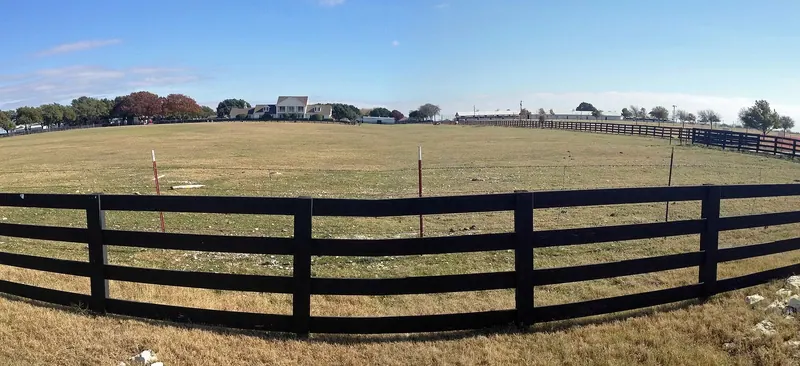
Why agricultural valuation matters in Parker
Parker's land pattern is built on acreage. The city's Agricultural and Open Space (A-O) zoning district requires five acres in contiguous tracts and permits farms, pasture, barns and stables alongside a single-family home, and most of the city's remaining large tracts sit along Maxwell Creek, Dublin Road and Bois D'Arc Lane. The luxury homes guide maps where those tracts are.
On the 2026 Collin Central Appraisal District (Collin CAD) roll, 69 parcels inside Parker, covering about 925 acres, carry agricultural appraisal. That is the largest block of undeveloped land in the city, and the valuation attached to it is often the single biggest factor in the tax bill on an acreage property. It is also commonly misunderstood. It is not an exemption, it does not follow a buyer automatically, and it can produce a large catch-up bill when the land changes use.
What "1-d-1" valuation is
Texas lets qualifying open-space land be taxed on its productivity value, meaning what the land can earn from farming or ranching, rather than its market value. The name comes from Article VIII, Section 1-d-1 of the Texas Constitution, and the rules sit in Chapter 23, Subchapter D of the Tax Code. The application is state Form 50-129, which Collin CAD publishes with its own questionnaire.
Because productivity value on North Texas pasture or hay meadow is a small fraction of what land sells for in Parker, the taxable value of the qualifying acres drops sharply. The house and the land under it are not part of that reduction (see the homesite section below).
The basic tests, as stated by the Texas Comptroller and Collin CAD:
- Principal use. The land must be devoted principally to agricultural use: cropland, hay, livestock, orchards, beekeeping, or wildlife management on land that already qualified.
- Degree of intensity. The use must meet the intensity generally accepted in the area. Each appraisal district sets those standards.
- History. The land must have been in qualifying agricultural use for at least five of the preceding seven years.
The extra test inside city limits
All of Parker's qualifying acreage is inside an incorporated city, and Collin CAD applies an added condition there. Land inside city limits must meet one of two tests: either the city does not provide general services to it comparable to other parts of the city with similar features and population, or the land has been devoted principally to agricultural use continuously for the preceding five years. In practice, the second test means a gap in agricultural use on a Parker tract is harder to recover from than the same gap on unincorporated land.
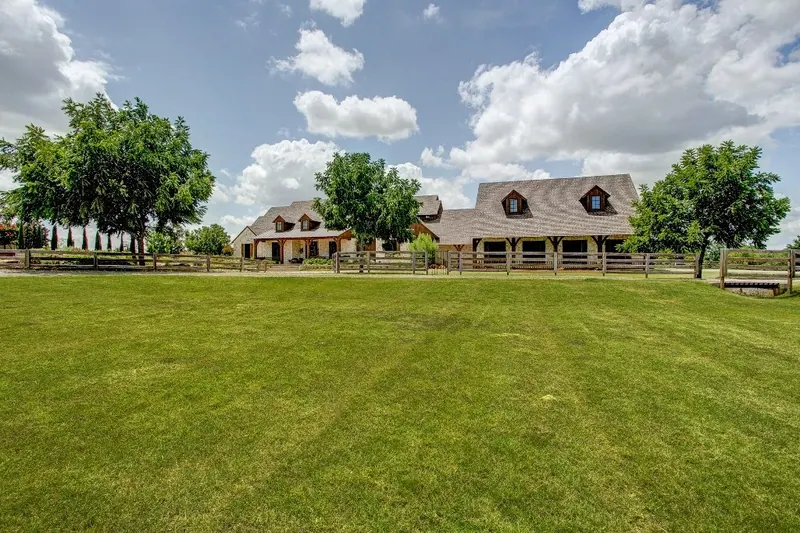
Collin CAD's standards on the ground
Collin CAD's Agricultural Land Qualification Guidelines (February 2023 edition, the version posted on the district's site in November 2026) set the working standards. The main ones for the kinds of land found in Parker:
| Use | Collin CAD standard |
|---|---|
| Livestock | At least 2 animal units on the pasture for most of the year (180 days). One animal unit is 1,000 pounds of livestock. Two units equal 2 cows, 2 brood mares, 4 calves of 500 pounds, 12 sheep or 14 goats. |
| Improved pasture | 3 to 5 acres per animal unit, so 6 to 10 acres to carry the 2-unit minimum |
| Native pasture | 4 to 6 acres per animal unit, so 8 to 12 acres for the minimum |
| Hay | 5-acre minimum, 2 to 3 cuttings a year; about 60 square or 3 round bales per acre per cutting on improved grasses |
| Orchards (wholesale) | 5 acres irrigated, 10 acres dry land or native, with minimum tree counts |
| Beekeeping | 5 to 20 acres, with 6 hives on the first 5 acres and 1 more for each additional 2.5 acres (6 to 12 hives) |
The guidelines also expect working practices: maintained fences, stock water, annual fertilizing of improved pasture, and animals marketed on a regular basis. Hay meadows are expected to produce roughly 2,000 to 3,000 pounds per acre per cutting.
Two points come up often on Parker tracts. Horses count as livestock, but a horse kept for riding is not the same as a breeding or production operation, and the district's questionnaire asks how animals are used and marketed. And many acreage owners in Collin County meet the standard by leasing the land to a rancher or hay producer. Form 50-129's questionnaire asks for the lessee's name, the lease price per acre and a copy of the lease.
Wildlife management and beekeeping
Wildlife management counts as an agricultural use only on land that qualified under 1-d-1 in the year before the switch. The owner files a Texas Parks and Wildlife Department management plan and must carry out at least three of seven practices each year: habitat control, erosion control, predator control, supplemental water, supplemental food, providing shelter and census counts. Collin CAD mails the annual wildlife report around November 15.
Beekeeping operations file the Beekeeping Annual Report with their application, and the hives must be alive and producing on the land. Collin CAD values beekeeping land on its dry cropland schedule.
The homesite is taxed at market value
Collin CAD sets aside at least one acre for the home site on an agricultural parcel and appraises it as a separate segment at market value, along with the house. On a 10-acre A-O tract with a residence, for example, about 9 acres would be eligible for productivity value and the homesite acre would not. A homestead exemption applies to the home and its homesite, not to the agricultural acres.
How and when to apply
- Deadline. File after January 1 and by April 30 of the tax year (Collin CAD's guidelines phrase this as before May 1). If the date falls on a weekend or holiday, the next working day applies.
- Late filing. Collin CAD accepts late applications until the appraisal review board approves the records, usually in July. An approved late application carries a penalty of 10 percent of the difference between the tax at market value and the tax at agricultural value.
- How to file. Mail or hand deliver to Collin CAD, 250 Eldorado Parkway, McKinney. The district recommends certified mail, and its beekeeping report states that it does not accept electronic delivery. Step 3 of the 2026 form asks for the acres and use in each year back to 2019.
- New owners. A change of ownership requires a new application. A buyer who closes after January 1 attaches the deed. Qualifying history belongs to the land, so a buyer who continues an existing operation can usually show the five years from the prior owner's use, but the buyer still has to file and meet the standards.
- Notice of a change. The owner must notify the chief appraiser in writing after stopping agricultural use.
Rollback taxes when the use changes
Selling agricultural land does not by itself end the valuation. A change of use does: building on the acres, subdividing them for homes, or turning pasture into a lawn or a commercial site. Collin CAD's guidelines note that a rollback is triggered by a physical change in use, not by a drop in intensity, although land that falls below the standards loses the valuation going forward.
When land is converted, the rollback tax is the difference between the taxes paid at agricultural value and the taxes that would have been due at market value for each of the three years before the change. House Bill 3833, effective June 15, 2021, cut that lookback from five years to three and removed interest on 1-d-1 rollbacks unless the rollback taxes become delinquent.
As an illustration only: if agricultural valuation lowered a Parker tract's taxable value by $500,000, the yearly difference at the 2026 combined rate for a Plano ISD address ($1.565823 per $100) would be about $7,830, and a rollback would cover three such years at each year's actual rates and values. Real figures depend on the tract's appraisals, so buyers should ask Collin CAD or the tax office for an estimate on a specific parcel.
What to check before buying acreage in Parker
- Whether the parcel shows agricultural appraisal on its Collin CAD record, and on how many acres.
- What operation qualifies it today, and whether a lease is in place that can continue after closing.
- The zoning on the city's map (A-O, SF or another district) and any plat notes, since a new home site or subdivision can trigger a rollback on the converted acres. The neighborhoods guide explains Parker's zoning districts.
- How the purchase contract assigns any rollback tax between buyer and seller.
- Whether you plan to keep the use at Collin CAD's intensity, and the April 30 filing date for the first year you own it.
Sources (7)
- Collin Central Appraisal District: Agricultural Use FAQs
- Collin Central Appraisal District: Agricultural Land Qualification Guidelines
- Collin Central Appraisal District: 1-d-1 Open Space Ag Use Application with Questionnaire, 2026
- Collin Central Appraisal District: Beekeeping Annual Report
- Collin Central Appraisal District: Agricultural and Special Use Forms
- Texas Comptroller: Agricultural and Timber Appraisal
- Texas Comptroller: Land Use Rollback Taxes
Last reviewed November 19, 2026. See something out of date? Email info@grisak.com.
 Schools
 Neighborhoods
 Moving to Parker
 Homes we have sold