

City Hall basics
City of Parker, 5700 E. Parker Road, Parker, TX 75002. Main line 972-442-6811. Utility billing hours are Monday to Friday, 8:30 a.m. to 4:30 p.m.
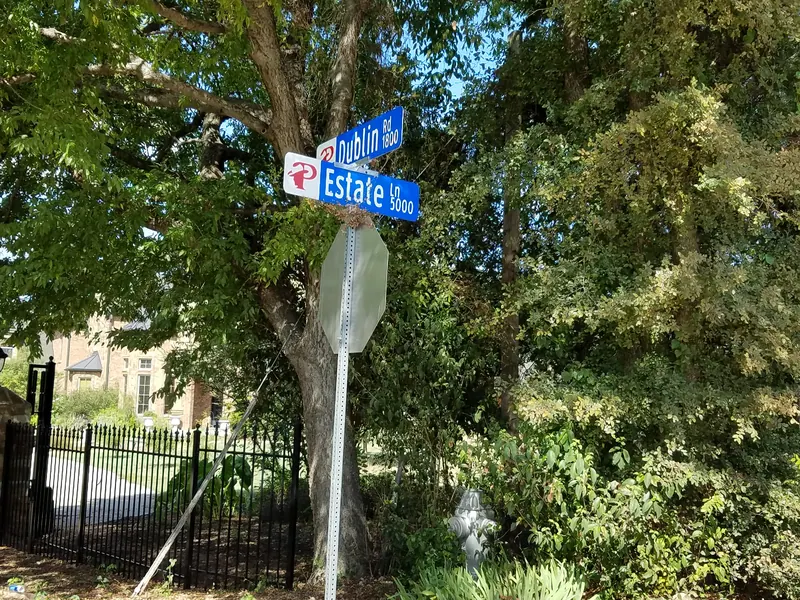
Most Parker homes use ZIP code 75002 (shared with Allen and Lucas) or 75094 (shared with Plano and Murphy, used at the south end along Dublin Road). The 52 homes in Kingsbridge, on the city's east edge, use 75098, Wylie's ZIP code. A ZIP code does not by itself mean a home is inside Parker city limits, and the reverse also happens: 54 homes inside the city show Allen or Lucas as the city in their property address on the 2026 appraisal roll. Check the city limits and the appraisal district record.
Utilities
Water
The City of Parker supplies water to homes inside the city and buys its supply from the North Texas Municipal Water District. To start service, submit a Water Service Agreement with a copy of a U.S. state-issued ID. A $50 setup fee is added to the first bill. Service starts only on weekdays between 8:30 a.m. and 3:30 p.m., so coordinate with the seller or builder to avoid a gap.
Bills go out at the start of each month and are due by the 16th. A late fee of 10 percent may apply on the 17th. Online payments carry a card fee of 3 percent plus $2.
Residential water rates effective October 2026:
| Usage | Rate |
|---|---|
| Minimum charge (includes first 4,000 gallons) | $59.32 |
| 4,001 to 15,000 gallons | $6.45 per 1,000 gallons |
| 15,001 to 30,000 gallons | $8.01 per 1,000 gallons |
| 30,001 to 50,000 gallons | $10.01 per 1,000 gallons |
| 50,001 to 70,000 gallons | $15.94 per 1,000 gallons |
| Over 70,000 gallons | $22.02 per 1,000 gallons |
The steep upper tiers matter on large lots with irrigation. The city publishes water conservation guidance and links to water usage portals where you can track consumption.
After-hours water emergencies: 469-479-8679.
Sewer or septic
City sewer is available only to certain homes in the northeastern part of Parker. All other homes use septic systems. The residential sewer rate, where it applies, is $123.75 per month effective October 2026. If the home is on septic, get the system inspected before closing and learn its maintenance schedule.
Trash, recycling, and bulk pickup
Republic Services collects trash and recycling weekly under a city contract, billed on the water bill. Effective January 1, 2026:
| Service level | Monthly rate |
|---|---|
| Standard: 2 trash carts and 1 recycling cart | $28.15 |
| Standard plus 1: 3 trash carts | $39.33 |
| Standard plus 2: 4 trash carts | $50.51 |
| Standard plus 3: 5 trash carts | $61.69 |
Extra recycling carts are free from City Hall. Carts must be at the curb by 7 a.m. Bulk waste and brush are collected once a month, up to 10 cubic yards, with brush cut to four-foot lengths and kept out from under power lines. Republic does not take refrigerators, paint, or chemicals. The city's household hazardous waste contract ended December 31, 2025, and the city said it was exploring other options. Republic Services: 972-422-2341, or use the Republic Services app.
Electricity and gas
Electric service depends on location. The city lists three providers for streetlight outage reports: Oncor, Farmers Electric Cooperative, and Grayson-Collin Electric Cooperative. In Oncor's area, residents choose a retail electric provider. In a cooperative's area, the co-op provides service directly. Natural gas is not available at every address. The city collects gas franchise fees and belongs to the Atmos gas steering committee, so check service for a specific property with Atmos Energy.
Property taxes
Parker homeowners pay property taxes to the city, Collin County, Collin College, and either Plano ISD or Allen ISD. Ten homes on the southeast edge, mostly in Brooks Farm Estates and Kingsbridge, are taxed by Wylie ISD instead. The Collin County Tax Office collects all of them (972-547-5020).
2026 rates (tax year 2026)
| Taxing unit | Rate per $100 | Notes |
|---|---|---|
| City of Parker | $0.300439 | FY2026-27 adopted, down from $0.310439 |
| Collin County | $0.151414 | |
| Collin College | $0.081220 | |
| Plano ISD | $1.032750 | |
| Allen ISD | $1.103700 | |
| Wylie ISD | $1.175200 | A few homes on the southeast edge |
| Total with Plano ISD | $1.565823 | |
| Total with Allen ISD | $1.636773 | |
| Total with Wylie ISD | $1.708273 |
Exemptions (2026)
| Taxing unit | General homestead | Over 65 | Disabled |
|---|---|---|---|
| City of Parker | none | $50,000 | not listed |
| Collin County | 5% ($5,000 minimum) | $30,000 | $20,000 |
| Collin College | 20% ($5,000 minimum) | $100,000 | $100,000 |
| Plano ISD | $140,000 | $60,000 | $60,000 |
| Allen ISD | $140,000 | $60,000 | $60,000 |
| Wylie ISD | $140,000 | $60,000 | $60,000 |
Collin County and Collin College offer a tax ceiling (freeze) for owners 65 and older. School district taxes on a homestead are frozen by state law for those owners. Apply for the homestead exemption through the Collin Central Appraisal District after you move in. The sales tax rate in Parker is 8.25 percent. See the property tax explainer for a worked example.
On the November 3, 2026 ballot
Collin County's all-race sample ballot for the November 3, 2026 joint election includes items that Parker voters will see:
- Collin County bonds: Proposition A, $296.5 million for courts, adult detention, and related facilities; Proposition B, $475 million for non-tolled roads and bridges; Proposition C, $6 million for parks and open space, including joint county-city projects; and Proposition D, $40 million for a county elections and storage facility. Each is labeled a tax increase on the ballot.
- Collin College: a $600 million bond for facilities used for workforce training, career and technical education, and academic instruction.
- Collin Central Appraisal District: elections for Board of Directors Places 1, 2, and 3.
There is no City of Parker, Plano ISD, or Allen ISD measure on the countywide sample ballot. Wylie ISD has trustee races. Polls are open 7 a.m. to 7 p.m. on Election Day, and the city posts polling dates and times on its Elections page.
Commute routes
Parker has no transit service. The Census Bureau's 2020 to 2024 estimate of mean travel time to work for Parker is 27.1 minutes.
- To Plano and US 75: west on Parker Road. DART's Parker Road Station, the northern end of the Red Line, is near US 75 between Parker Road and Park Boulevard.
- To Allen, McKinney, and SH 121: north on FM 2551 or Lewis Lane to Lucas Road, then west on Bethany Drive or Lucas Road toward US 75.
- To Murphy, Wylie, and points south: south on FM 2551 (Murphy Road) to FM 544.
Expect lane shifts on FM 2551 through 2027. TxDOT plans to move traffic onto new pavement between FM 1378 and West Lucas Road in early 2027 and between West Lucas Road and Bethany Drive in summer 2027.
Permits
Parker's building department issues permits for new homes, remodels and additions, accessory buildings, fences, pools, irrigation systems, electrical, plumbing, and mechanical work. Contractors must register with the city. Submit completed forms by email to frontdesk@parkertexas.us or at City Hall, and pay online by card.
To request an inspection, email inspections@parkertexas.us with the permit number, address, contact, and inspection type. Requests received by 8 a.m. are eligible for same-day inspection, and Monday inspections are limited. A new fee schedule took effect October 1, 2026.
Other rules worth knowing:
- Fireworks are prohibited in the city.
- A teen curfew applies from 11 p.m. to 6 a.m. for those 17 and younger.
- Alarm systems must be registered with the police department.
- Outdoor burning is subject to county and city burn bans. A ban was lifted October 5, 2026.
- Dove hunting is permitted on several tracts in and around the city from September 1 through October 31.
HOAs
HOAs in Parker vary by subdivision. Associations for Southridge and Brooks Farm appear in city notices, and other subdivisions have their own associations or recorded deed restrictions. Ask for the HOA documents, dues, and any architectural review rules before closing.
Public safety
- Police: Parker Police Department, 972-442-0333 for records. Non-emergency dispatch is through Murphy at 972-468-4236. The department offers free fingerprinting for residents by appointment and a house watch program.
- Fire and EMS: Parker Fire Department, an Advanced Life Support provider, staffed around the clock from the station on Parker Road.
- Emergencies: 911.
First 30 days checklist
- Submit the Water Service Agreement and ID to Utility Billing before move-in day.
- Confirm whether the home is on septic or city sewer, and schedule a septic inspection if needed.
- Find your trash day and download the Republic Services app.
- Set up electric service with the right provider for your address.
- File a homestead exemption with the Collin Central Appraisal District.
- Confirm your school zone with Plano ISD's School Finder or Allen ISD's boundary map and enroll.
- Register any alarm system with Parker Police.
- Update your vehicle registration and driver license address within the state deadlines.
- Register to vote in Collin County.
- Sign up at CollinTaxInfo.org for property tax database notices.
- Get the 2026 bulk trash calendar from the city's website.
- Before any project, check permit requirements with the building department.
Sources (21)
- City of Parker: New Resident Information
- City of Parker: New Service
- City of Parker: Utility Billing rates
- City of Parker: Trash Collection
- City of Parker: Recycling
- City of Parker: Home Hazardous Waste
- City of Parker: FAQs
- City of Parker: Building Permits
- City of Parker: Police
- City of Parker: Fire Department history
- City of Parker: FM 2551 Project FAQ
- City of Parker: News Flash (fee schedule, burn ban, dove season)
- City of Parker: FY2026-27 Adopted Budget
- City of Parker: 2026 Notice of Estimated Taxes
- City of Parker site map (electric provider report pages)
- Collin County 2026 Tax Rates and Exemptions by Jurisdiction
- U.S. Census Bureau QuickFacts: Parker city, Texas
- Parker Road station (Wikipedia)
- Collin County Elections: November 3, 2026 all-race sample ballot
- City of Parker: Elections
- Collin Central Appraisal District parcel layer, 2026 certified values (hosted by the City of Allen GIS)
Last reviewed October 2026. See something out of date? Email info@grisak.com.
 Restaurants
 Luxury homes
 New construction
 Homes we have sold